



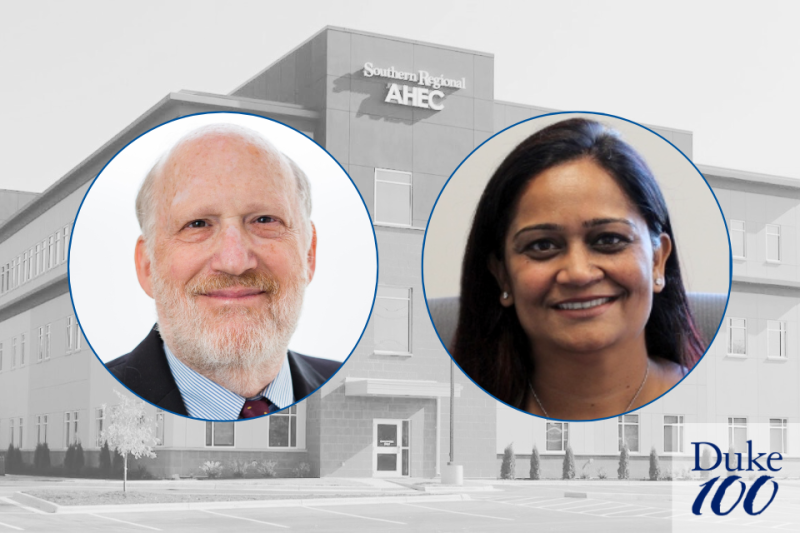
Duke AHEC: 50 Years of Workforce Development in Behavioral Health and Beyond
In the past two years, the North Carolina Area Health Education Centers program—known as “NC AHEC”—has helped more than 40 primary care practices across the state implement the collaborative care model, giving patients at those clinics much-needed access to integrated medical and behavioral health care under one roof.
This model, which embeds a behavioral health care manager in the primary care practice and engages a psychiatric consultant for several hours per week, is particularly beneficial to residents in rural areas with few, if any, specialists trained to treat mental health conditions. Developed at the University of Washington’s Advancing Integrated Mental Health Solutions (AIMS) Center, the collaborative care model is shown to be financially sustainable, produce better patient outcomes, improve patient and provider satisfaction, and reduce health care costs and disparities....
RECRUIT TRAIN RETAIN: DEVELOPING THE WORKFORCE FOR A HEALTHY NORTH CAROLINA
Southern Regional Area Health Education Center’s (SR-AHEC) role in advancing health care education and health care access is unique and multi-faceted. Helping the medical professional provide high quality care to patients drives everything we do.By offering continuing professional development to practicing health care professionals, we keep people working in allied, behavioral and public health, doctors, dentists, nurses and pharmacists, up-to-date on new innovations and best practices – translating into more health care professionals knowing exactly what do to about what ails their patient.
Home to Fayetteville’s first family medicine residency program, Southern Regional AHEC recruits eight new resident physicians each year to fulfill their requirements for board certification. After their three-year residency is complete, our intent is to keep those doctors working in our local communities to increase the number of primary care doctors in the region, while improving health care access to our citizens. Since 1974, more than 250 doctors have graduated from the program - with almost half of them staying to work in our nine-county region. For more information on our residency, go to familymedresidency.org