Mobile Outreach Clinic Brings Health Access to Community’s Vulnerable

Generic selectors
Exact matches only
Search in title
Search in content
Post Type Selectors

With Funding Help from Southern Regional AHEC and NC AHEC

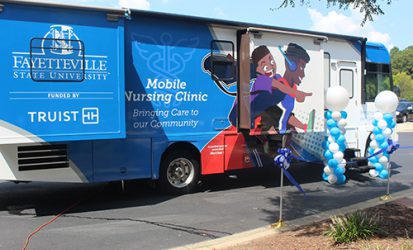
On Tuesday, August 24th, a ribbon-cutting ceremony took place at Fayetteville State University’s Southeastern NC Nursing Education and Research Center, celebrating “Bringing Care to the Community” and revealing the Beyond the Bedside Mobile Nursing Clinic. Its financial sponsor and FSU partner, TRUST, along with Clinical Site Development Grant funding from Southern Regional AHEC through the NC AHEC Program, helped to bring the mobile unit, housed within a retrofitted RV, to realization. Soon, the Bronco-blue-and-white mobile clinic, clad with the buoyant, bright artwork of FSU student Albert Bass, will travel to the areas of Cumberland County in most need, to meet the basic healthcare needs of our citizens. 

At the ceremony, FSU Chancellor Darrell T. Allison noted that the unit is a win/win for the campus and the community, especially during a pandemic. It offers an affordable solution to those who need healthcare, but do not have the transportation necessary to travel to their doctor’s office. The service also provides hands-on clinical experiences to nursing students attending FSU. “We celebrate this momentous occasion to further prove that we are doing what we said we would, by serving the citizens of Cumberland County”, he told the guests on Tuesday afternoon. “The people of our community will come to see this as a symbol of FSU’s example and service.”

Southern Regional AHEC is proud to be part of this important project that coincides with our organization’s mission to increase access to care while increasing the number and diversity of healthcare professionals in our region. 

Raise Awareness With Youth Skills Day

Generic selectors
Exact matches only
Search in title
Search in content
Post Type Selectors

Youth Skills Day was adopted as a resolution on December 18, 2014 by the United Nations General Assembly and this day is celebrated on July 15th yearly. A part of this resolution was the Incheon Declaration: Education 2030 which was to “Ensure inclusive and equitable quality education and promote lifelong learning opportunities for all.”

Youth Skills Day was created to raise awareness about the importance of technical vocational education and training (TVET) as well as, the development of other skills relevant to both global and local economies.

This year’s Youth Skills Day will have a more challenging context resulting from the pandemic creating a disruption of TVET. The need for the development of youth skills may have been enhanced as we are emerging from the pandemic. Per COVID, young adults (under 25 years old) were 3 times as likely to be unemployed. Now, 1 in 6 young adults are out of work because of COVID.

Technical vocational education and training plays a key role in fostering resilience in young adults. These skill developments helps to bridge gaps, creating solutions for the present and the future. TVET can help youth with skills that are required to access self-employment, improve responsiveness to changing skill-demands by communities and companies, increase wages, and increase productivity. This can be opportunities for low-skilled people who are unemployed or underemployed, or out of school individuals and youth that are not in education, employment and training.

Youth Skills Day has highlighted more of a need during and after the pandemic. Youth generally work in the service industry, which has not recovered from the pandemic, and some jobs have vanished. At this time, many schools may not provide career counseling and development and this can impact their résumés and career development.

Youth Skills Day is important because we know employment offers many benefits to people diagnosed with mental health conditions, including their improvement in empowerment, self-efficacy, and economic status. We must also be aware how stigma can be a significant barrier to employment for anyone with mental health conditions, and especially youth, and we have to remain optimistic about career prospects. Under or unemployment is also linked to low birthweight, elevated rates of depression and increased alcohol use.

When youth have meaningful employment, it decreases the risk of involvement in criminal activity and the juvenile justice system and increases the chances of that youth graduating from high school.

Practice Support News

June is Alzheimer’s and Brain Awareness Month

Generic selectors
Exact matches only
Search in title
Search in content
Post Type Selectors

June is Alzheimer’s and Brain Awareness Month. Alzheimer’s is a type of dementia, a disease that attacks the brain and it is defined as a progressive mental deterioration that can occur in middle or old age due to generalized degeneration of the brain. Alzheimer’s is the most common form of dementia. It is a progressive disease, symptoms gradually worsen over the years. In its early stages, memory loss is mild, but late-stage dementiacan affect an individual’s ability to communicate and respond to his or her environment. Early-onset Alzheimer’s occurs between ages 30 and mid-60srepresenting less than 10% of people with Alzheimer’s. Research suggest there are changes in the brain that may begin at least a decade before memory or other cognitive problems appear. Even though people may seem to be symptom free, there are toxic changes taking place in the brain.

There are an estimated 47 million people worldwide and 5.5 million Americans of all ages living with Alzheimer’s and other dementias, and without a change, this number is expected to grow to 76 million by 2030. Some of the signs of dementia are:

  • Challenges in planning or solving problems
  • Confusion with time or place
  • Misplacing things and losing the ability to retrace steps
  • Memory loss that disrupts daily life

These are common signs and symptoms of Alzheimer’s and other dementias, but remember each person is different. Only a doctor can diagnosis someone with Alzheimer’s or other dementias. A strong support network including support groups that allow caregivers to express concerns, share experiences, receive emotional support, find respite care, and have good coping skills are ways caregivers handle and relieve stress as they navigate with their loved ones on this journey.

May is National Mental Health Month

Generic selectors
Exact matches only
Search in title
Search in content
Post Type Selectors

May is National Mental Health Month. Created in 1949, National Mental Health Month was established with the purpose of promoting the importance and awareness of mental wellness and mental health in all American’s lives, and to reduce the stigma people experience with a mental health diagnosis. Stigma continues to prevent people from seeking appropriate treatment. Suffering with untreated mental illness sometimes will cause individuals to self-medicate, with substances from alcohol to prescription drug abuse.

This past year has highlighted the need for mental health awareness in every aspect of our lives including how people suffered from isolation, grief, financial insecurity, food instability and sickness. We have seen and heard how the pandemic has created barriers to treatment, which is especially considering how one in six youth (6 – 17 years old) experience a mental health disorder and one in five adults experience mental illness each year. These conditions include depression, schizophrenia, post-traumatic stress disorder, anxiety, and bipolar disorder.

National Mental Health Month also focuses on mental health resilience. Resilient mental health can be defined as being able to cope with the ups and downs of life, and to maintain a positive outlook. A mentally and emotionally resilient person has the tools for coping with difficult situations. This makes the person focused, productive and flexible and it also makes them less afraid of new experiences and uncertain future. Mental health resilience is important in helping people to improve relationships, contribute to their community in a meaningful way, cope with stress, be physically healthy, realize their potential, and work productively.

April is Stress Awareness Month

Generic selectors
Exact matches only
Search in title
Search in content
Post Type Selectors

April is Stress Awareness Month. This past year has certainly taught us the importance of learning to cope with our stress and finding healthy ways to deal with different situations. Healthy coping strategies can go a long way in living a healthy and positive life.

The American Psychological Association found in 2017 the most common sources of stress reported among Americans were the “future of our nation” (63%), money (62%), work (61%), political climate (57%), and violence/crime (51%).

One technique that experts recommend to address stress is to have a specific 30-day challenge. This challenge encourages you to do one action for your mental, physical and emotional wellbeing every day. This challenge can help you find ways to cope with your own stresses and may also provide helpful strategies in changing your mindset and outlook on stress.

The 3 important self-care practices to consider are:

  • Exercise Move every day for 10 minutes or more to boost your serotonin levels, feel a sense of accomplishment, and improve your energy.
  • Practice Healthy Boundaries Learn to say no to the things that diminish the quality of your life. These might include media, food, people, and unhelpful activities.
  • Set a Routine Make time in your schedule for taking care of the things that are important to you including work, play, and rest. Establish a regular sleep schedule.
  • Make sure to incorporate at least one relaxing and rewarding thing once a week.

Each March, the Academy of Nutrition and Dietetics Celebrates Nutrition Month

Generic selectors
Exact matches only
Search in title
Search in content
Post Type Selectors

Hippocrates said “Let thy food be thy medicine.” Each March, the Academy of Nutrition and Dietetics celebrates Nutrition Month. Nutrition Month was created to focus on reminding people to make correct food choices in addition to developing good exercising and eating habits. Throughout life, a nutritious diet supports an overall stronger mental and physical development and aging process, reduces risks of chronic disease, helps to maintain a desirable body weight and leads to overall well-being and health.

NewsWise published an article which addressed nutritional needs in different stages of life:

  • Teens to 20s — Build bone density by eating and drinking calcium-rich foods and beverages such as fat-free or low-fat dairy milk or yogurt or calcium-fortified soy beverages. Non-dairy sources of calcium include fortified cereals, beans, some leafy greens and canned salmon with bones.
  • 30s to 40s — Eating a variety of nutritious foods, especially plenty of fruits and vegetables, whole grains and beans, peas and lentils for vitamins, minerals, antioxidants and dietary fiber.
  • 40s to 50s — Fine tune your healthful eating habits and continue to incorporate regular physical activity as your body changes due to fluctuating hormones and slowing metabolism. Also, continue to focus on ways to limit foods and beverages with added sugars, salt and saturated fat.
  • 60s and beyond — Continue to include a variety of protein-rich foods to maintain bone strength and incorporate strength-building activities to maintain muscle. Good sources of protein include seafood, lean cuts of meat, eggs, beans, tofu and nuts. Animal-based protein foods also provide vitamin B12, which is a concern for some older adults.

February is National Teen Dating Violence Awareness and Prevention Month

Generic selectors
Exact matches only
Search in title
Search in content
Post Type Selectors

1 in 3 teens have experienced teen dating violence nationwide. Teen dating violence can have long-term and severe short-term effects on teens, and these teens are more likely to use drugs, alcohol and tobacco; contemplate suicide; eating disorders and experience symptoms of anxiety and depression.

As we continue to navigate through the COVID-19 pandemic, we should be more aware of digital dating abuse. Digital dating abuse is defined as using technology to continually harass a romantic partner with the intent to control, coerce, intimidate, annoy or threaten them. Video chat, social media, and texting are different ways youth communicate that provide various opportunities for digital dating abuse.

It is encouraged to talk to youth early about dating violence and healthy relationships. Some tips on having a conversation with youth about health relationships are:

  • Encourage thoughtful, honest, and open dialogue – Talk openly and allow them to articulate what a healthy relationship is to them.
  • Be active in the youth’s life – Find activities and interests you can do with the teen.
  • Be supportive and nonjudgmental – Try to respect differences of opinions, come to mutually acceptable decisions, and be aware of seeming too judgmental or pushy so the teen does not become too defensive.

National Poverty in America Awareness Month

Generic selectors
Exact matches only
Search in title
Search in content
Post Type Selectors

January is National Poverty in America Awareness Month. The poverty rate in the United States increased from 9.3% in June to 11.7% in November, the biggest increase in one year since 1960. The federal poverty line is $26,200 for a family of four. Poverty can cause malnutrition and hunger; lack of proper medical care; social discrimination and exclusion; and limited access to education and other basic services.

Housing affects almost everything: it plays a critical role in providing stability to poor families. Housing poverty includes energy and fuel poverty, lack of access to water, and lack of sanitation. The housing market does not produce enough affordable housing, and the number of households paying more than 30% of household income for rent is at historic levels. Families with severe rent burdens are left with very little room for other necessities. Often, they face eviction, sometimes repeatedly, or in worst cases, end up homeless.

Poverty USA’s Poverty Quiz, will help you learn about the structures and systems that affect our communities. Some ways we can help to combat poverty in America is through contributing to charities with support and time. Different charities assist with food aid, access to education, and other areas. Charity Navigator evaluates charitable organizations in the US for efficient use of funds.

National Family Caregivers Month

Generic selectors
Exact matches only
Search in title
Search in content
Post Type Selectors

November is National Family Caregivers Month. There are more than 40 million people who serve as unpaid caregivers for family members with functional impairment, disabilities, and/or terminal or chronic illnesses.

These caregivers are essential in the role they play to ensure the well-being and health of their family, and they need support and compassionate care. As the pandemic continues, caregivers are continuing to provide a vital lifeline of devotion, energy, immeasurable time, encouragement, resources and hope. The additional stress of caregiving may take a significant toll on someone’s mental wellness. This might be seen as struggles with post-traumatic stress disorder (PTSD), anxiety, depression, and/or a problematic relationship with substances.

It is really important for caregivers to maintain their mental well-being, even if the caregiver feels they have no time to schedule self-care. That self-care could be accepting offers from others to help, taking care of their own health, checking in with themselves to make sure they are not becoming depressed and being open to new technologies that can assist in the care for their family member.

The National Alliance for Caregiving (caregiving.org) provides an array of valuable information that range from family supports, professional resources and virtual toolkits.

National Recovery Month

Generic selectors
Exact matches only
Search in title
Search in content
Post Type Selectors

September is National Recovery Month, designed to educate Americans that substance use treatment and mental health services can enable those with substance use and mental disorders to live healthy and rewarding lives. This is the 31st year celebrating the gains made by those in recovery, and celebrating improvements made by those who are managing other health conditions such as hypertension, diabetes, asthma, and heart disease.

Recovery Month promotes and supports new evidence-based treatment and recovery practices, the dedication of service providers and community members across the nation who make recovery in all its forms possible, and the emergence of a strong and proud recovery community.

The COVID-19 pandemic has posed significant challenges to those in recovery, caused in part by difficulty receiving in-person treatment, the inability to meet in-person for peer support groups, and social isolation. COVID-19 has caused many other overwhelming emotions including fear, uncertainty, and stress to those who face the day-to-day reality of overcoming addiction, and made it more difficult for people to access care. Even though there are challenges to developing and fostering meaningful connections, have by creating new means of connecting, Americans in recovery resolve to fill the void of in person interactions and demonstrated resilience. This resilience comes from establishing virtual peer support groups that embrace technology like videoconferencing to holding health and wellness classes remotely or in person following social distancing guidelines. During this time, we must support our loved ones, neighbors and friends who are struggling with substance use disorder and celebrate those living in recovery.

Raising Awareness of America’s Health Centers Accomplishments

Generic selectors
Exact matches only
Search in title
Search in content
Post Type Selectors

August 9 – 15 is National Health Center Week. This annual celebration’s goal is raising awareness about the mission and accomplishments of America’s health centers over the past five decades. This year, the National Health Center Week honors front line providers, staff, and beloved patients who lost their lives during the (ongoing) COVID-19 pandemic. Community Health Centers serve as the beacon of service, care, and strength in their communities. In moments of pain and loss, Community Health Centers offer support and love. In moments of triumph, they offer hope and a vision for the future.

From the very beginning of the crisis, Community Health Centers began finding innovative ways to provide preventative and primary care to their patients. Health centers serve 27 million patients, which continues to be a growing number. Health centers reach beyond the walls of conventional medicine to address the social determinants of health affecting special patient populations produce innovative solutions to the most pressing health care issues in their communities.

The following days are dedicated to particular areas that spotlight the high-quality care health centers provide as they work to improve health outcomes and narrow health disparities in their communities:

  • Sunday, 8/9: Public Health in Housing Day
  • Monday, 8/10: Healthcare for the Homeless Day
  • Tuesday, 8/11: Agricultural Worker Health Day
  • Wednesday, 8/12: Patient Appreciation Day
  • Thursday, 8/13: Stakeholder Appreciation Day
  • Friday, 8/14: Health Center Staff Appreciation Day
  • Saturday, 8/15: Children’s Health Day