
Family First: The Invisible Impact of Deployment on Children and Adolescents
Thursday, November 19, 2026 | 11:30 a.m. - 1 p.m. EST
Livestream Webinar
Any location with internet service.
Questions? Contact Us!

This activity is supported by funds from the Barry Robinson Center.
Target Audience
This program is designed for behavioral health professionals, social workers, counselors, psychologists, healthcare providers, educators, military family support personnel, and community-based professionals who work with children, adolescents, and families affected by military deployment. The content will be particularly relevant to professionals seeking to enhance their understanding of deployment-related stressors, resilience factors, and effective support strategies.
Program Description
“The Invisible Impact of Deployment on Children and Adolescents” explores how parental military deployment shapes the emotional, developmental, and relational experiences of children and adolescents across the full deployment cycle—preparation, separation, and reintegration. Drawing on real-world examples and current research, this presentation examines common stressors such as shifts and overload in household responsibilities, anxiety about the deployed parent’s safety, changes in behavior and school performance, social isolation, loyalty conflicts, and challenges reconnecting with the returning parent and re-establishing roles in the family system. Participants will gain insight into protective factors and practical strategies that caregivers, educators, and providers can use to identify invisible stress, support resilience, and facilitate healthier adjustment for military-connected youth before, during, and after deployment.
Registration Fee
There is no registration fee for this program.
Objectives
- Describe at least three common emotional, behavioral, and developmental responses experienced by children and adolescents during the pre-deployment, deployment, and reintegration phases of a parent's military deployment.
- Identify at least three risk factors and three protective factors that influence resilience and adjustment among military-connected children and adolescents throughout the deployment cycle.
- Apply at least three evidence-informed strategies that caregivers, educators, healthcare professionals, and community providers can use to support coping, strengthen resilience, and facilitate healthy family reintegration following deployment.
Agenda
11:30 a.m. Welcome
Emotional and Behavioral Responses During Deployment Phases
Risk and Protective Factors that Influence Resilience and Adjustment Among Military Connected Children
Discuss Evidence Based Strategies to Support Coping and Facilitate Healthy Family Reintegration
1 p.m. Adjourn
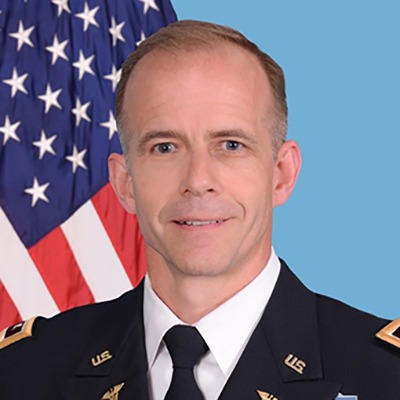
Speaker
COL Daniel Hart, MD commissioned in the US Army as an Infantry Officer in 1997. During his 15 years in the Infantry, he deployed to Iraq twice and Afghanistan once, leaving his amazingly competent wife to care for the family consisting of 5 kids, 7 kids, and 8 kids on the three respective deployments. In 2012, he transitioned to the medical field where he discovered an unexpected passion for treating mental health as a psychiatrist. He graduated from the Uniformed Services University in 2016, finished residency in 2020 and in 2022, as he explained to his children, he finished "29th grade" with the completion of the National Capital Consortium Child and Adolescent Psychiatry Fellowship. He served as the United States Army Special Operations Command Psychiatrist at Fort Bragg, North Carolina from 2022-2026 and now cares for active-duty Soldiers, children and adolescents as the Womack Army Medical Center Chief of Psychiatry and Chief of the Child and Family Mental Health Services.
Credit
C.E.U.: .15
Contact Hours: 1.5
NCASPPB: Pending approval by the North Carolina Addictions Specialist Professional Practice Board for up to 1.5 hours of credit.
NC Psychologists Category A: The program will provide 1.5 contact hours (category A) continuing education credit to NC Psychologists.
NBCC: Southern Regional AHEC has been approved by NBCC as an Approved Continuing Education Provider, ACEP No. 5362. Programs that do not qualify for NBCC credit are clearly identified. Southern Regional AHEC is solely responsible for all aspects of the programs

Substitutes/Refunds/Transfers
• Cancellations must be in writing (email or mail).
• Registrants cancelling between two weeks and five full business days prior to the first day of the event are refunded at 70% of the registration fee subject to a minimum $25 cancellation fee.
• No refunds or credits will be given for cancellations received less than five full business days prior to the event.
• No refunds or credit will be given for no-shows.
• No vouchers will be issued in lieu of a refund.
• Transfers/substitute(s) welcome (notify in advance of the program).
Attendance at this activity grants permission for Southern Regional AHEC to use any photographs, audio, video, or other images from this activity for promotional or educational purposes. Please notify an AHEC staff member if you have concerns.
ADA Services
Americans with Disabilities Act Individuals requesting accommodation under the Americans with Disabilities Act (ADA) should contact the ADA coordinator at least five days prior to the event at (910) 678-7305 or mariah.williams@sr-ahec.org.
Do you have questions? Contact us!
Jasmine Harris, Director of CPD, Behavioral Health / (910) 678-7218 / jasmine.harris@sr-ahec.org
Mariah Williams, Project Specialist / (910) 678-7305 / mariah.williams@sr-ahec.org